

The long standing DeFi credit markets have not seen much innovation.
What if there is a protocol that can combine Betting + Hedging + Yields?
Lets dive into the concept interest rate swaps and the innovation that @ipor_io brings to the table 🧵👇

What are interest rate swaps (IRS)?
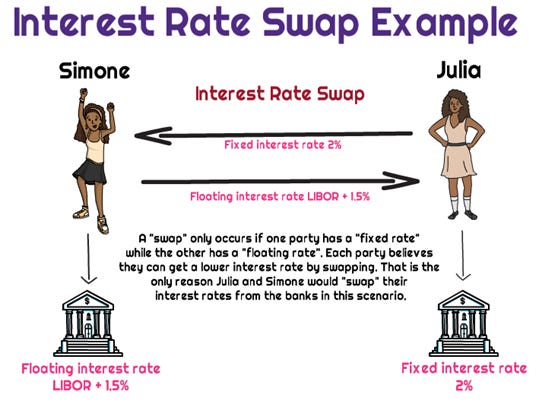
IRS is an agreement where two parties exchange (or swap) interest payments over a period of time. i.e. A takes a loan with variable interest, B takes a loan with fixed interest.A prefers certainty, B views that interest rate could decrease.
An IRS would benefit both borrowers, A and B, as it allows them to hedge their interest rate risk. Both borrowers would swap their interest payments, fitting their risk profile.
Win win for all. Basically, exchanging cash flows.
IPOR brings this IRS concept on chain.
What is IPOR?
Inter Protocol Over-block Rate (IPOR) is a DeFi protocol that aims to provide a benchmark lending (variable) interest rate, analogous to LIBOR on-chain.
IPOR achieves this by querying a series of smart contracts of Interest Rates Derivatives.
IPOR relevance in DeFi
DeFi credit market stands at a TVL of $22b. Globally, TradFi lending market is worth $8.7b. Defi needs an interest rate hedging tools to mature. Also, an average DeFi user would not track the floating rates that are priced based on risk, supply and demand.
Market opportunity is huge for IPOR to bring IRS on chain with its 3 products to the DeFi credit markets:
1) IPOR Index
2) IPOR AMM
3) Asset Management.
1) IPOR index
Provides a fair market cost of money for USDC, USDT, and DAI. Users can bet on interest rates.
Users decide to pay a fixed over variable i/r, when they assume that variable i/r ⬆️
Users decide to pay a variable over fixed i/r, when they assume that variable i/r ⬇️
2) IPOR AMM
is where the contract exchange for IRS happens between two parties.
Users deposit a collateral fee and determines leverage multiple, this this derives the total position value
(2a)
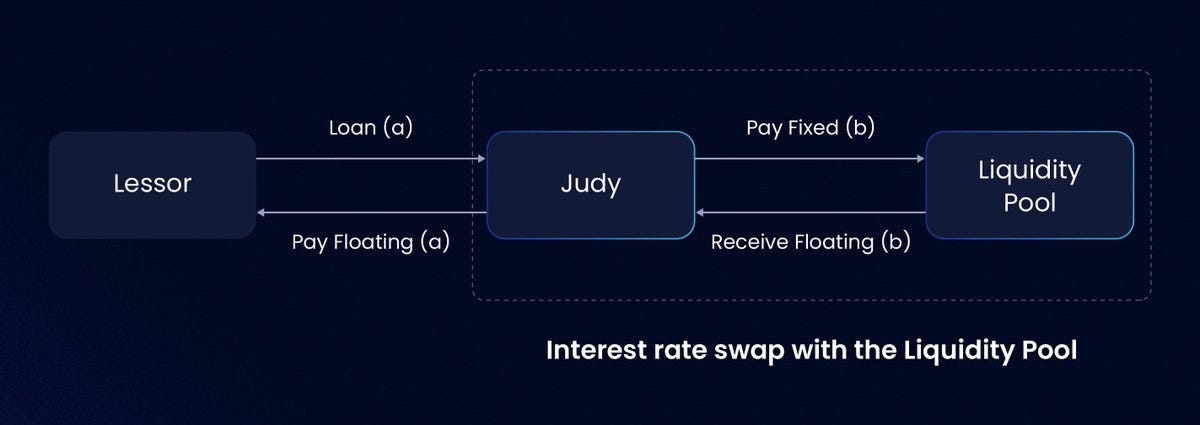
If users pay the floating i/r rate, AMM pays you the fixed rate
→ if the floating rate rises above the fixed rate
→ you pay more than you receive, and vice versa.
(2b)
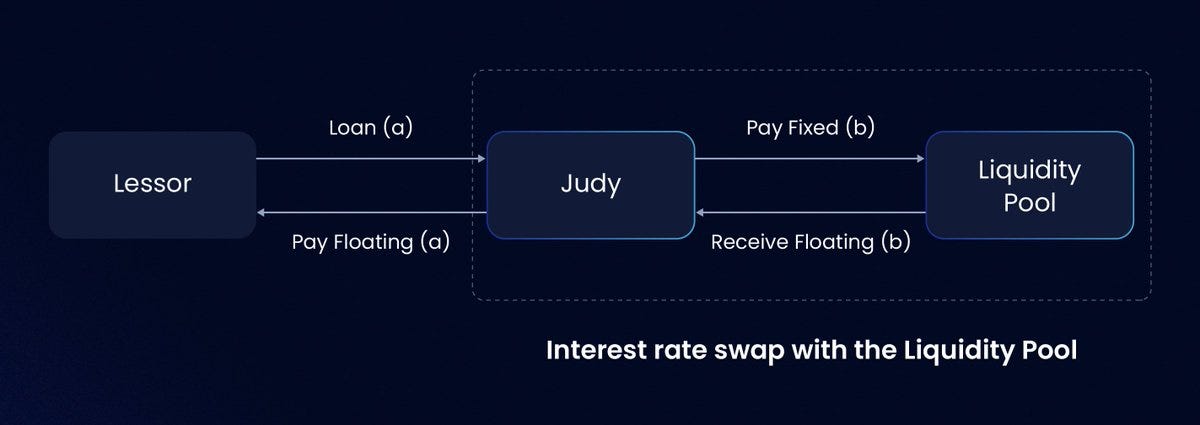
If users are paying the fixed i/r rate, AMM pays you the floating rate
→ if the floating < fixed rate
→ users pay more than you receive, and vice versa.
3) Asset management
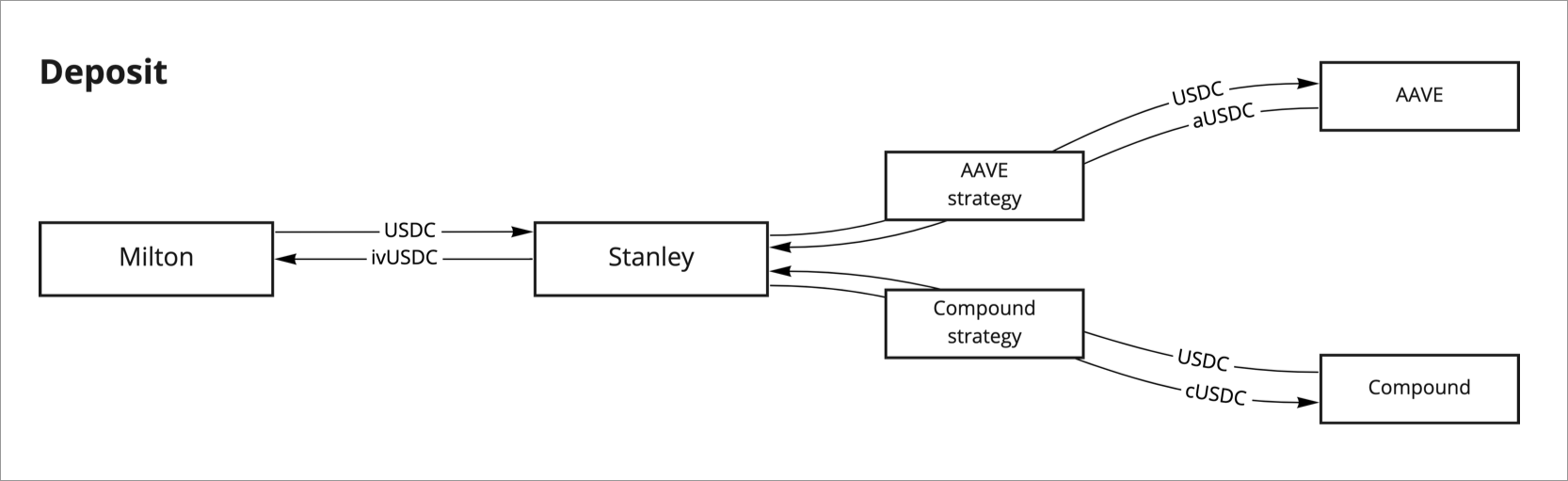
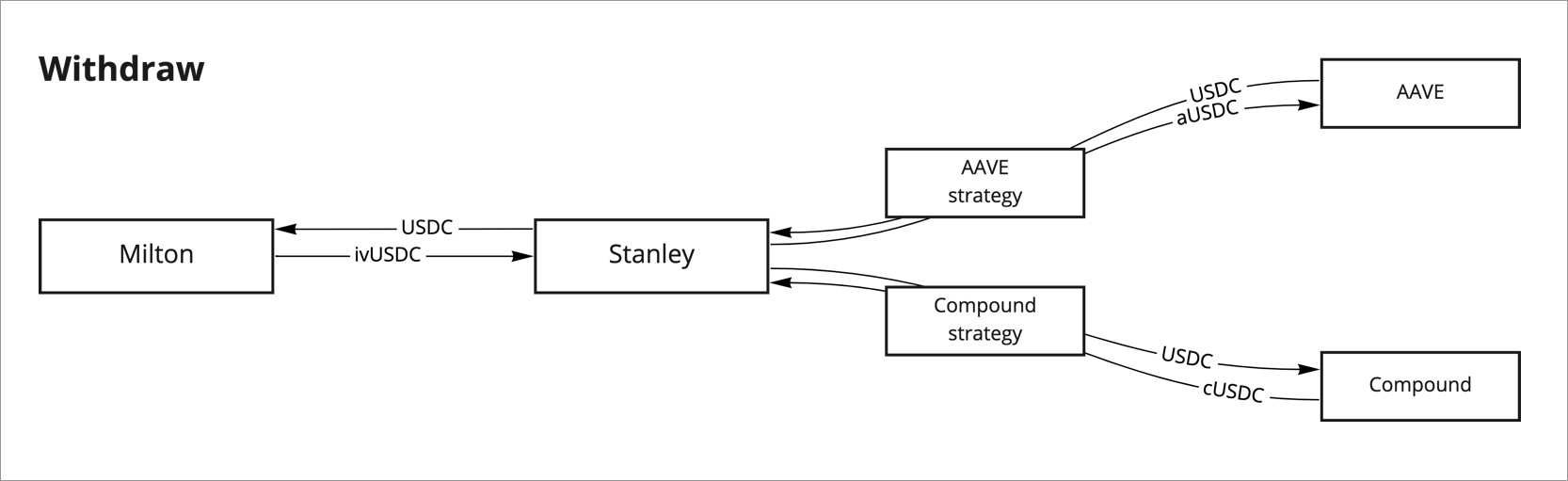
IPOR manages users' assets on their behalf. Surplus that exceeds the required reserve will be deposited into Aave and Compound for more yield.
Illustrating this flow with a diagram:
Stanley = asset management suite of contracts
Milton = AMM
Source: https://twitter.com/arndxt_xo/status/1617552879979462656