

It's been a wild week for the economy, but all eyes were on the banking sector as financial system instability took center stage.
A major global bank's share prices took a serious dive, reigniting concerns about the spread of economic stress.
Want more inside scoop?
Past data has shown quite positive figures. But that is not all there is to it. We will have to sit tight and watch how the bank saga unfolds or "folds"
A ToE Macro Pulse series.
🟢 Consumer Price Index
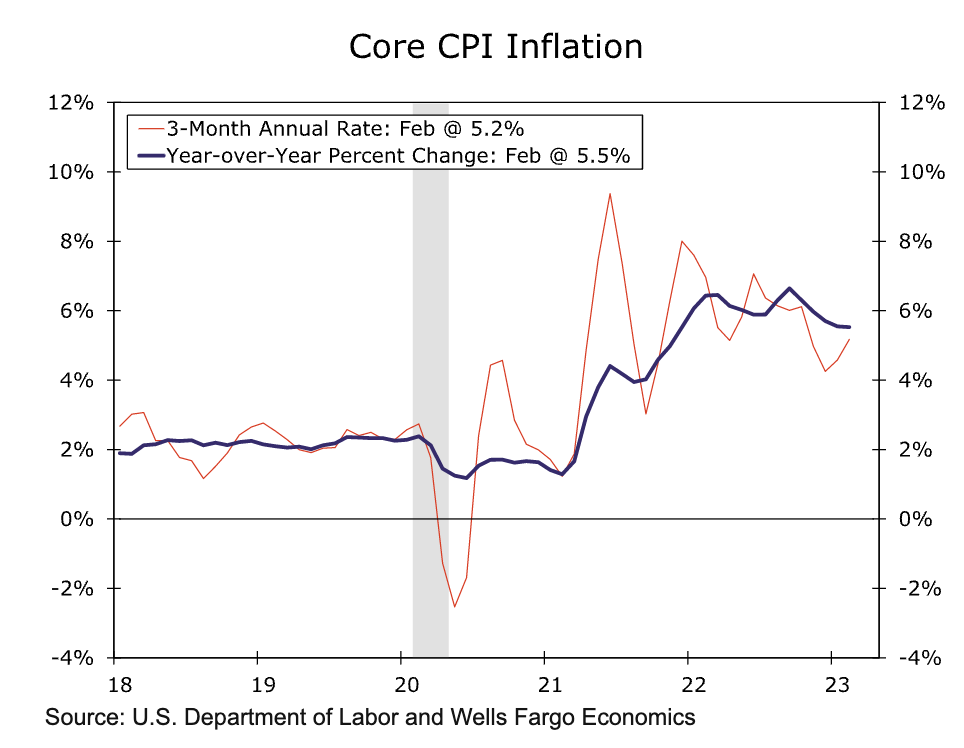
CPI has been showing some signs of cooling off lately, but February's print didn't exactly follow suit.
The headline CPI rose 0.4%, just a hair slower than the previous month.
But, the core index, which excludes food and energy prices, was a bit hotter than expected with a 0.5% increase.
And get this, the core CPI is now running at a 5.2% three-month annualized rate, way above the Fed's 2% inflation target.
🟢 Producer prices
Fell unexpectedly in February, with the PPI declining 0.1%.
Its suggesting underlying inflation pressures are not intensifying, although the stickiness in consumer price inflation indicates a long path back to the Fed's target.
🟢 Retail sales
Rose 0.5% in Feb, which is an important input to personal consumption expenditures and a big part of GDP.
Even better, past months sales # were revised upward, painting a positive picture for real GDP growth in Q1 2023.
The economy is on a positive trajectory.
🟢 Manufacturing
Factory output is still growing, albeit at a slower pace.
While rising interest rates and slowing demand may pose a challenge, the fact that manufacturing production is still expanding is an encouraging sign for the economy.
🟢 Housing market
Surge in multifamily construction was the main driver, single-family starts also saw a slight increase. And for the first time in 12 months, single-family permits rose, showing that builders are becoming more optimistic.
Incentive programs have helped, but even more encouraging is the return of sidelined buyers.
Mortgage applications for purchase have risen for two consecutive weeks, putting an end to the declines seen in February.
All of this points to a stabilizing residential market as buyers adapt to a higher rate environment.
🔴 Leading Economic Index (LEI)
Took another hit in February, falling 0.3% for the 11th month in a row. That's not a good sign, folks.
One reason for the decline is consumers' expectations, which seem to be dwindling.
Sentiment about current and future conditions has dropped, even though inflation expectations have eased.
With the current banking crisis, credit conditions could get even tighter, leading to a recession in the latter half of 2023.
Let's hope things turn around soon!
🟡 State of banking sector

Some U.S. banks have been struggling to meet their obligations to depositors due to losses on securities holdings.
The KBW Bank Index, which measures the performance of 24 major banks, has taken a hit of almost 25% since March 8th.
The U.S. government has stepped in to prevent a global financial crisis. The Treasury Department, Federal Reserve, and FDIC have taken action to reassure depositors that their money is safe.
All depositors of Silicon Valley Bank and Signature Bank will be made whole, even for uninsured deposits above the $250,000 threshold.
$25B lending program called the Bank Term Funding Program (BTFP) will provide loans of up to one year to eligible depository institutions.
So, what does this mean for the banking industry as a whole?
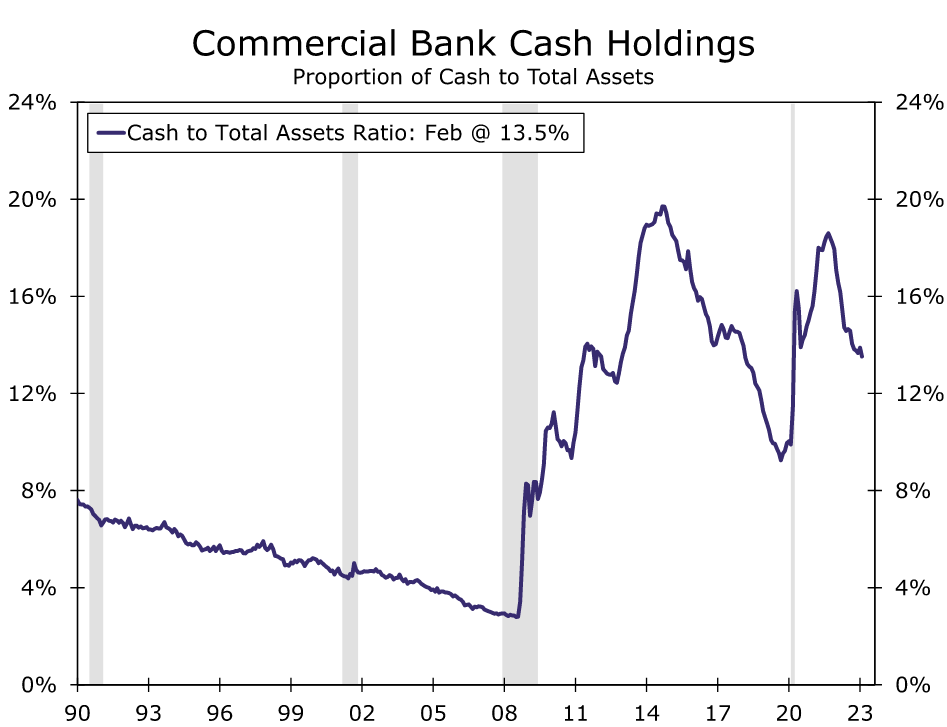
While there are concerns about systemic issues, the banking system is relatively liquid and well-capitalized.
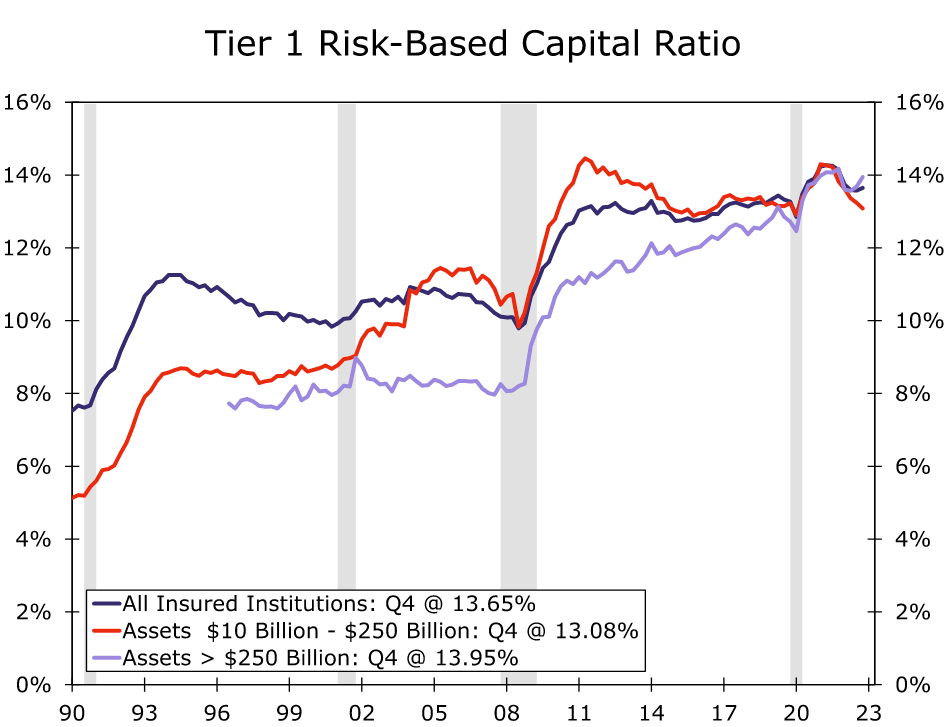
The Tier 1 Risk-Based Capital Ratio of the system is almost 14% at present, which is higher than it was on the eve of the global financial crisis.
The commercial banking system is also quite liquid, with cash predominantly in the form of deposits at the Federal Reserve.
-
In conclusion, there are reasons to be optimistic that the banking crisis will not lead to a wider financial meltdown.
However, shareholders and some unsecured debtholders may not be protected.
Despite efforts to prevent another global financial crisis, the consequences of recent events will likely have a lasting impact on the economy.
This means tighter financial conditions and increased uncertainty, leading to slower credit growth and a decline in GDP.
The FED will likely pause or at least keep to its work its tightening cycle at its March 22 meeting due to recent market volatility.
I would expect more rate hikes in later on before easing monetary policy in Q4 as the recession deepens and inflation comes down.