

Understanding macro trends is key to staying ahead of the curve
But this information here cannot be accessed by the masses
Spilling undisclosed macro insights known only to top 1%🧵

MUFG shares its Macro Supercycle insights for Apr 2023 only for the C-suites. Here are the topics covered, shared to you now:
1️⃣Financial system intolerant of higher rates
2️⃣Financial stability concerns
3️⃣Sticky and non-linear progression
4️⃣Long and variable lags
5️⃣The ambiguity of sufficiently restrictive
6️⃣Recession may have already began
7️⃣Banks and market now doing the tightening
8️⃣From inflation and duration to recession and credit risk
9️⃣Sustainable recovery more likely in 2024
1️⃣0️⃣ The Great Moderation is over
1️⃣Financial system intolerant of higher rates
We saw a decade of easy money with the big 4 central banks 5x their balance sheets.
Fiscal stimulus were huge during the COVID era and that excess liquidity build-up contributed to today's inflation and financial instability.
Today, US economy is hyper-financialised with much of its growth built over periods of low GDP growth, inflation and rates.
With tightening, financial system shows weakness; intolerant to higher interest rates.
2️⃣Financial stability concerns
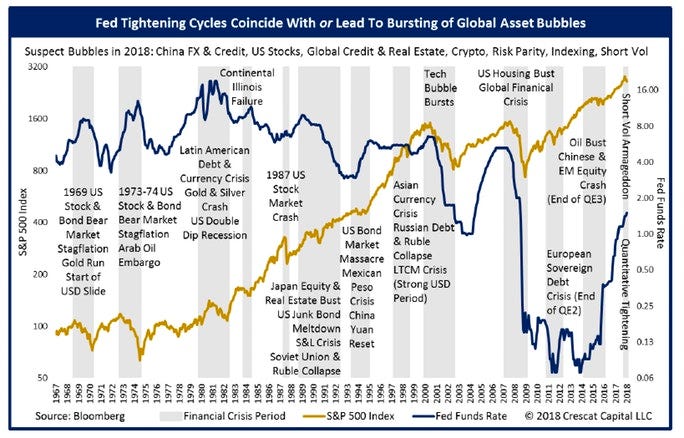
To the experts, its not surprising as the tightening cycles always lead to some casualties.
Financial assets surged beyond GDP growth for over a decade. Bank securities ballooned.
Credit spread widens and interest rate rise put banks at risk with 620b of unrealised losses between bond book values and market values.
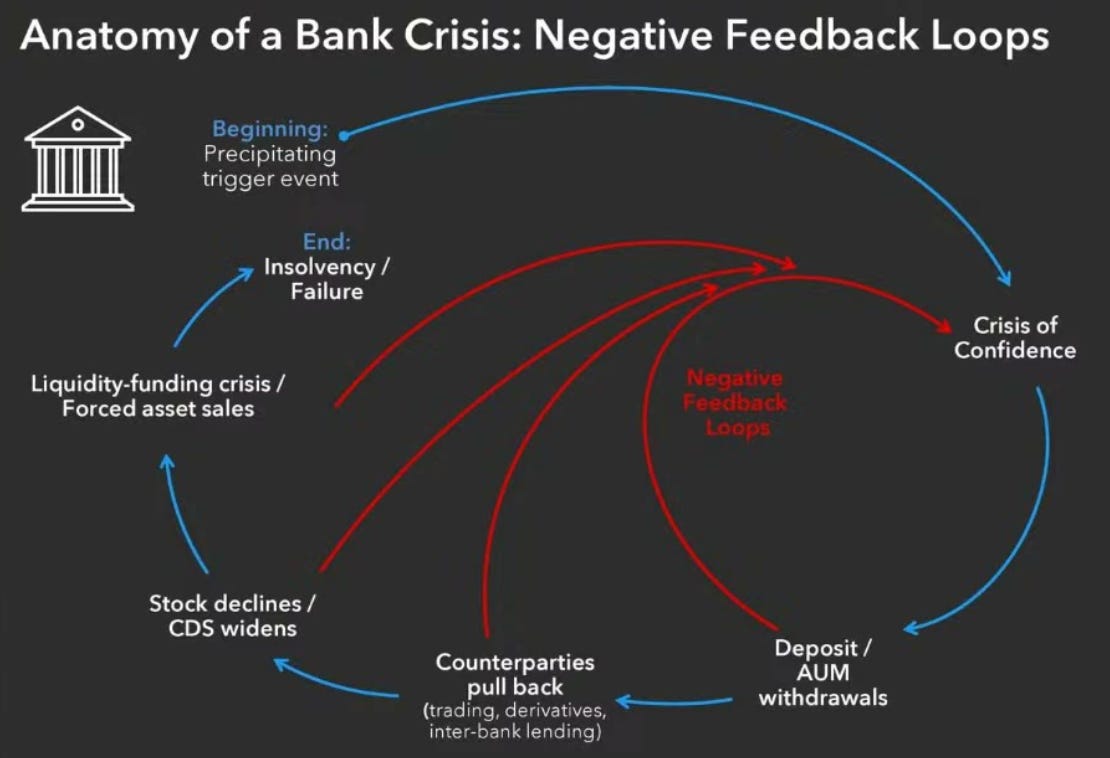
This is not the same as the crisis in 2008 as banks today are well capitalised holding quality assets.
3️⃣Sticky and non-linear progression
Core goods inflation declined in Feb. Core service inflation rose. Supecore(ex-shelter) remained stick and still remains high.
Supply chain improved as China's re-opened, fewer shipping congestion, parts shortages and weaker dd for goods.
4️⃣Long and variable lags
Fed tighening at the fastest rate (hike) reducing its balance sheet by $100B per month.
Historically, the effects of the tightened monetary policy comes in 12 to 18months later. Ripple effects to real economy would take longer.
5️⃣The ambiguity of sufficiently restrictive
Fed's data dependent policy approach is challenged with fluctuation data.
As a result, Fed has been behind the curve on inflation. The benchmark policy rate is below the rate of inflation.
6️⃣Recession may have already began
Every time the headline US inflation has risen above 5% a tightening and recession usually follow.
If we look back at the 12 Fed tightening cycles, recessions then to to have a higher risk of hard landing.
It might be likely be so now.
7️⃣Banks and market now doing the tightening
Financial conditions have tightened. IG (investment grade issue) is at all time low in March.
Estimating and IG issuance to remain the same.
Small regional banks are critical sources of credit.
8️⃣From inflation and duration to recession and credit risk
Credit spreads always spread wider 5 to 7 months after start of recession. We'll likely see it increasing in 2H of 2023.
Equities tend to hit new lows ~6months after recession.
Low in corporate earnings coming in 6 12months later
9️⃣Sustainable recovery more likely in 2024
Global slowdown is forecasted for all countries in 2023.
And some recovery predicted to happen in 203.
1️⃣0️⃣ The Great Moderation is over
Business cycles are likely to be shorter and more vulnerable. Due to effective inflation policy and better supply chain management.
40 year bull market for bonds and zero interest rate policy has ended.
Though commodity boom are rare events, we might be in the stages of one.
A supply constrained commodities super cycle that is likely to last a decade.
The commodity super cycle could be fuelled by de-globalisation, energy transition, regulatory dynamics, labour shortages, investor demands and years of structural under investment.