

Inevitable that DEXes compete on @arbitrum for their $ARB allocation. I always look elsewhere...
Unnoticed is a stable swap AMM that is not content to merely follow the pack.
Instead, it breaks free from the constraints with its groundbreaking math and smart contracts.🧵

1/ Just beta launched on 20 Mar, @MantisSwap is building a next gen DEX on @0xPolygonLabs
1️⃣ Overview of Mantis Swap
2️⃣ Mantis vs competitors
3️⃣ Mantis' Core design
4️⃣ $MNT tokenomics
5️⃣ Bullish Plans
2/
1️⃣ Overview of Mantis Swap
MantisSwap is a single-sided AMM that aims to be the liquidity hub for pegged assets on Polygon.
Why pegged assets? Because this reduces the impermanent loss faced by LP providers plus a protection mechanism in place (will go into it later)
3/ I like Mantis because it builds its own smart contracts and you can see it through its nerdy math in the docs.
It sets to achieve:
▫Greater capital efficiency
▫Lower trading fees and slippage
▫Capital protection for LP providers
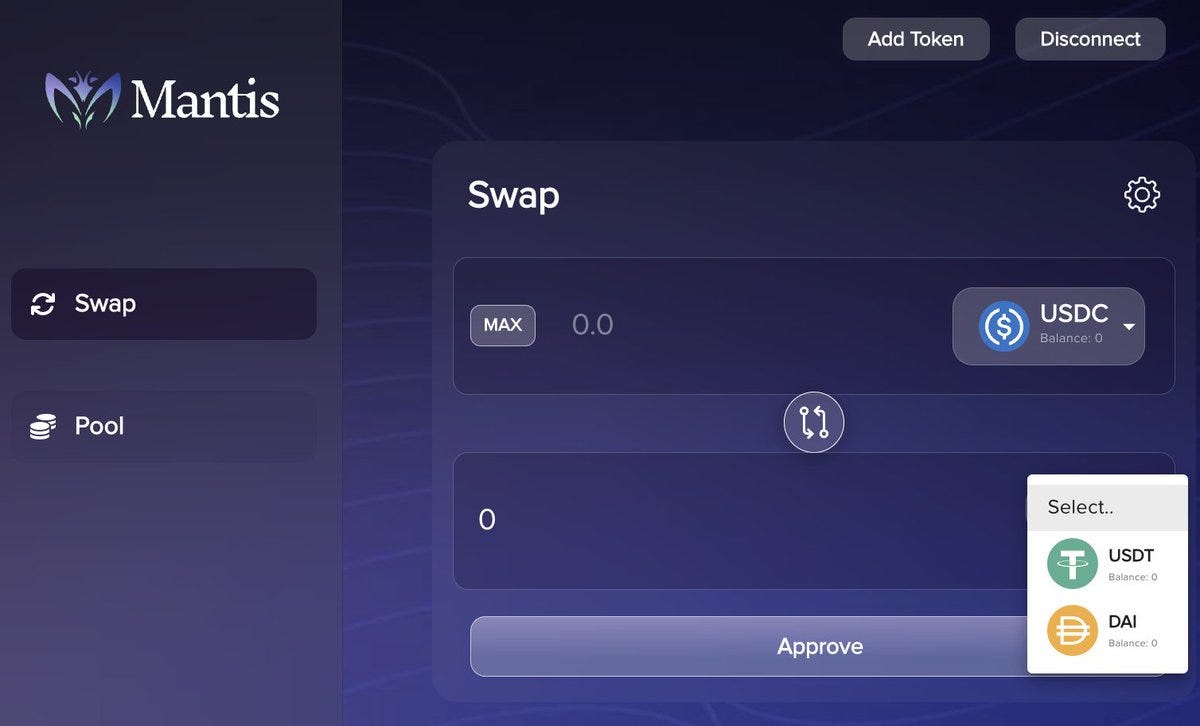
4/ The dApp UI is also a pleasure to interact. Simple and clean. Though still bare, just note that its in beta testing and I expect it to be beefed up once live.
Mantis boasts that its better than competitors. Its UI is pretty neat but how true are its other features?
5/
2️⃣ Mantis vs competitors
Mantis developed their trading simulator to compare how they would fare as compared to their competitors.
It's a testament of what they said they could achieve. And these backtests are a thorough one.
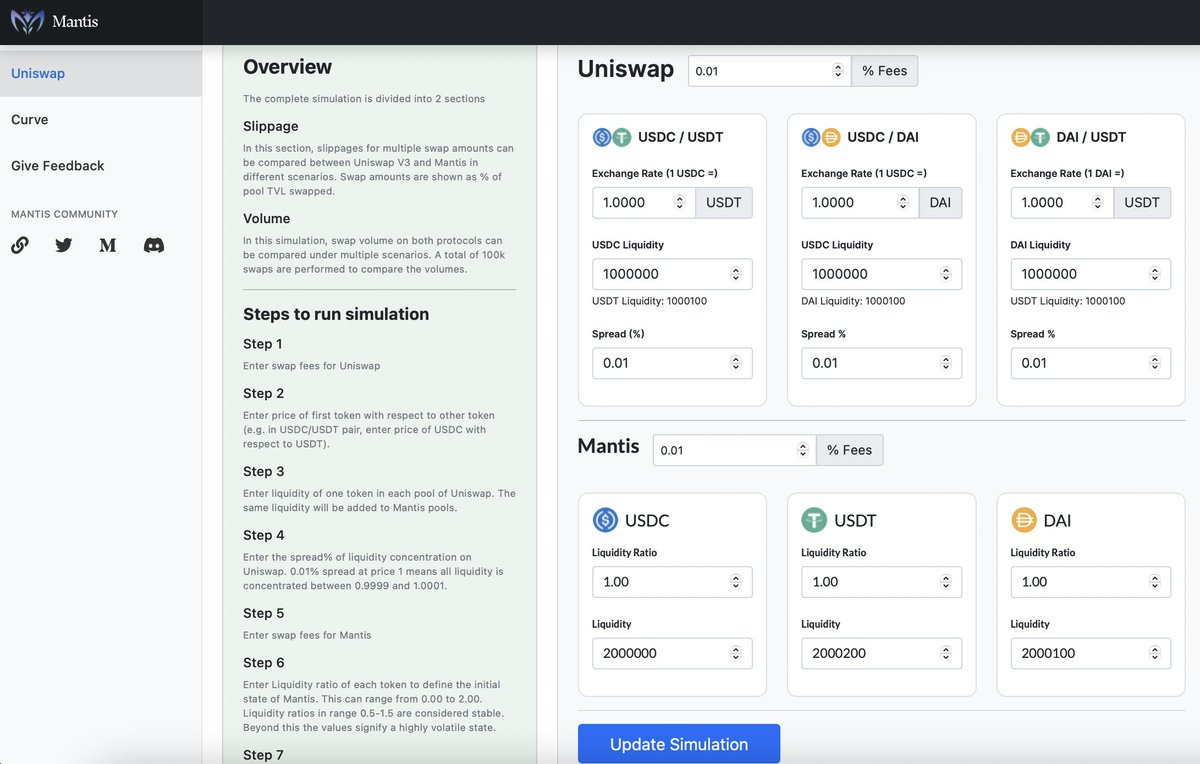
6/ They have simulated @MantisSwap against @Uniswap and @CurveFinance for 2 scenarios:
▫Stablecoins staying true to peg
▫Stablecoins deviating from peg
across 2 metrics:
▫Slippage
▫Volume
From the vigorous simulation, here are some 🔑 takeaways:
7/
▫Lower slippage than Uniswap and Curve
▫High slippage for large swap sizes (prevent pools from being drained)
▫Circuit breaker mechanism protects LP provider
▫If swap is unfavourable on one side, the other side will be favourable
These findings shape Mantis' core design
8/
3️⃣ Mantis' Core design
Looking beyond the results from technical simulation, Mantis also found shortcomings with the AMM design of its counterparts.
Thus, giving brith to its commitment to redesign its stable swap AMM design
9/
🔷 Shortcomings with current AMM design
▫Impermanent Loss
The general assumption is that stablecoins maintain a 1:1 peg and LPs are not protected in the case of depegging. (that's why we have @y2kfinance).
So a depeg would leave LPs with the devalued asset like $UST.
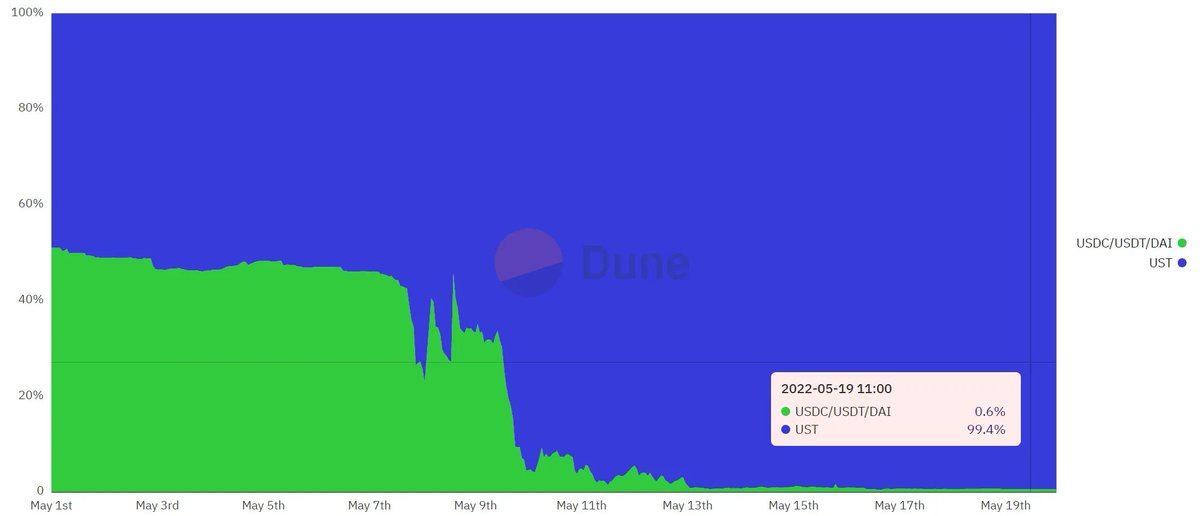
10/ This design flaw also applies to LSDs as they also maintain a 1:1 peg to its staked tokens. i.e. stETH:ETH. With no such mechanism in place, a "bank run" could be catastrophic for any kind of pegged assets.
11/ ▫Capital Inefficiency due to Liquidity Fragmentation
Base assets are often stablecoins, and many are often duplicated across various paired-LPs. If there are 400 pools, it means the DEX needs 400x of these stablecoins to be deployed into 400 pairs.
12/ Then, liquidity becomes fragmented amongst different pools. You can imagine that it is not capital efficient with alot of the TVL required.
This gets even more inefficient when only the top few pools are deep enough to not suffer significant price impact or slippage.
13/
🔷Mantis core features
Mantis plans to move the DEX tech one step forward with:
▫Omnipool Architecture
▫Account Model
▫Slippage Curve
▫Autonomous Loss Protection
14/
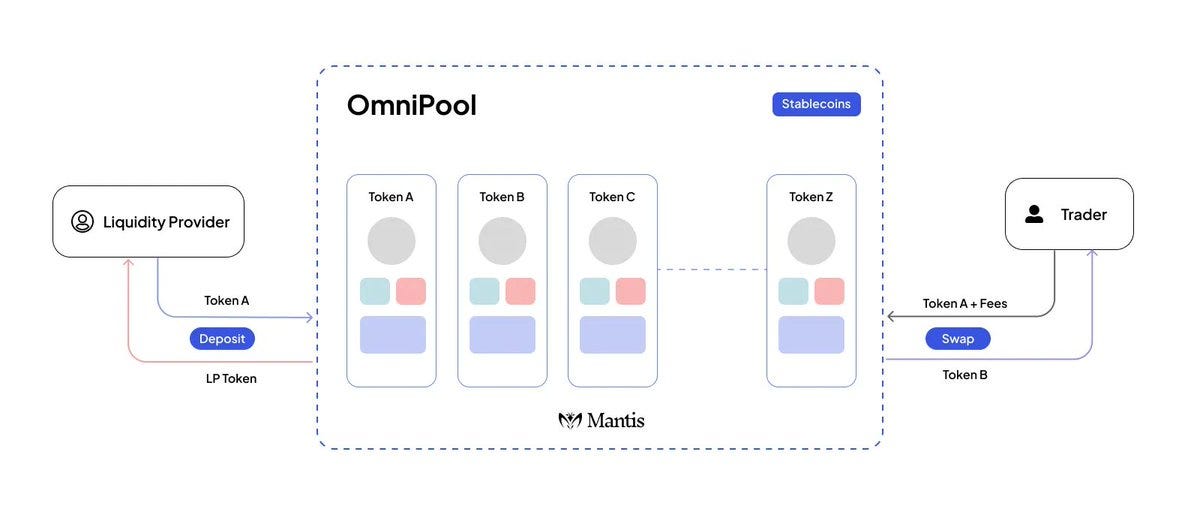
▫Omnipool Architecture
It consolidate tokens of the same kind in a single trading pool so any any trade will draw liquidity from this omnipool resulting in:
• Deeper liquidity, capital efficient
• Lower slippage, transaction cost
• No indirect routing between pools
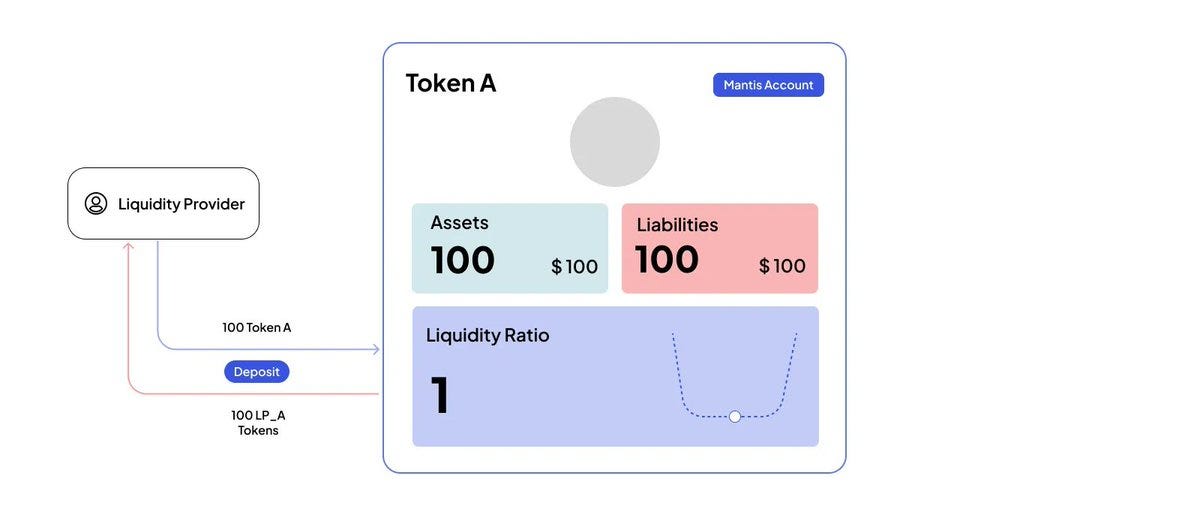
15/ ▫Account Model
Every account now act as a LP; consisting of its own assets and liabilities.
“Asset” is the amount of tokens that remain in the pool available to be exchanged.
“Liability” is the total amount of token deposited over time as liquidity in the pool.
16/ ▫Slippage Curve
Mantis' slippage curve is a key differentiator from existing AMMs.
The steep convexity at tail ends means that if there is an imbalance in the pool, and someone tries to make a trade that would worsen the imbalance, they would have to pay a higher fee.
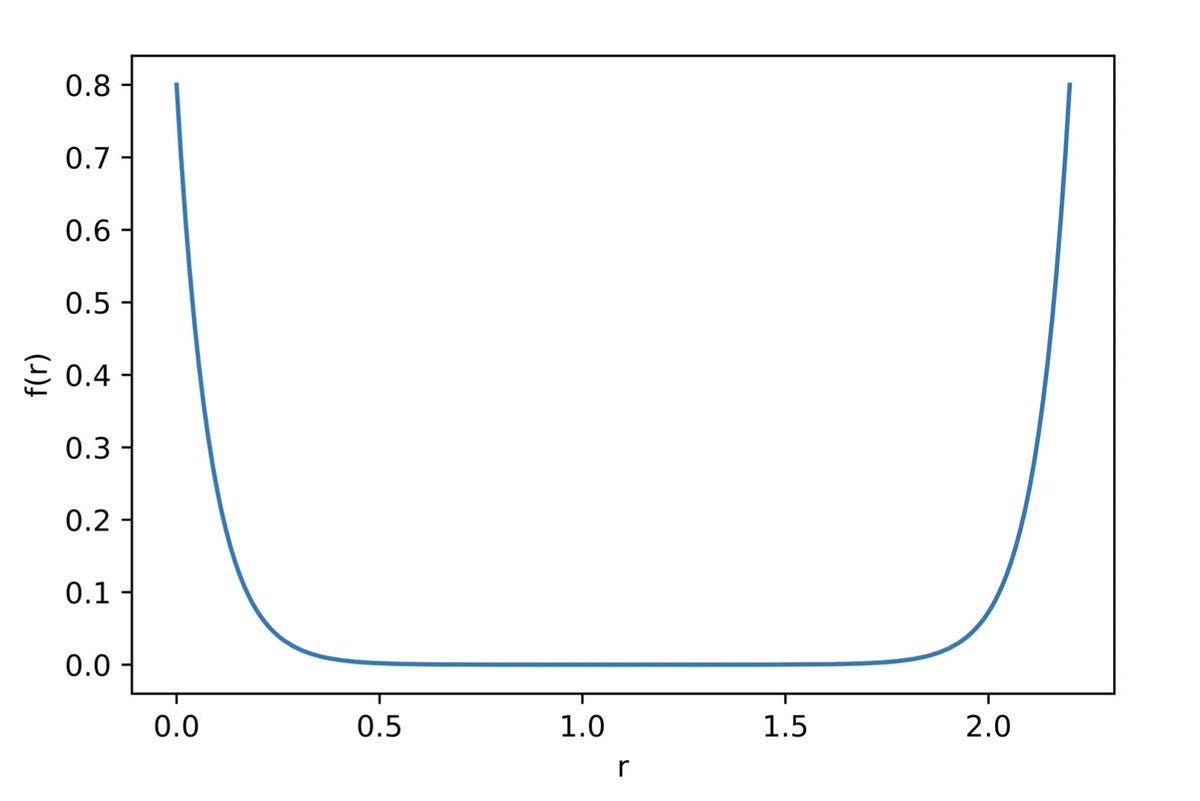
17/ The Omnipool also has a high liquidity ratio, which means that it has a large amount of assets in the pool relative to the amount of trading activity.
This helps to ensure that the pool remains healthy and stable, even during periods of high volatility or low liquidity.
18/ ▫Autonomous Loss Protection
Mantis built in a mechanism guarding users against depeg events. When a token depegs beyond a threshold, a circuit breaker is triggered and the token cannot be swapped.
So if depegging continues, users' losses are capped.
19/
4️⃣ $MNT tokenomics
Distribution is rather fair. However, I would prefer a
▫Longer vesting for team vs investors
▫Smaller investor allocation or at best do without investors
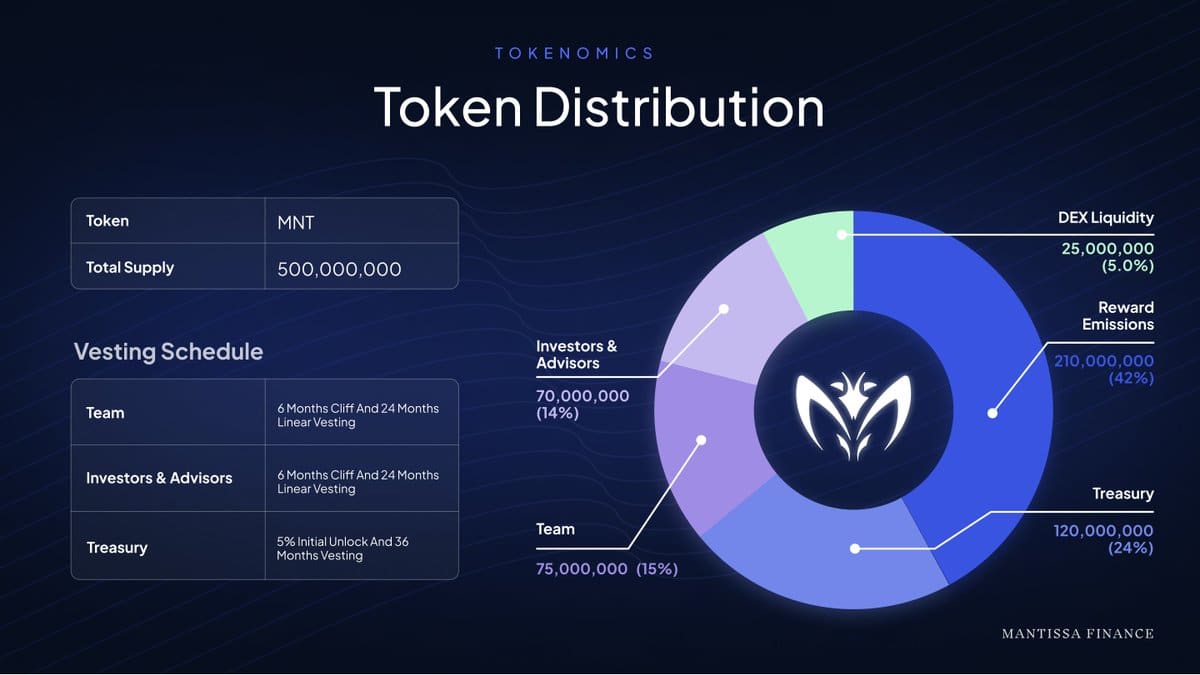
20/ $MNT is NOT live yet and will have use cases like governance voting, reward for LPs and boosts.
$MNT can be earned by through the liquidity mining rewards, which can be boosted by veMNT.
21/
5️⃣ Bullish Plans
Security audits completed with @peckshield
Mantis is also aims to be a powerhouse DEX.
They are looking to build a perpetuals on top of their stableswap AMM.
22/ I feel rather confident that Mantis can have stronger partnerships with these already secured:
Stables - @QiDaoProtocol $MAI
Vault providers - @beefyfinance, @tetu_io
LSD - @LidoFinance
As you know, security and project quality is what these blue chips protocols look at.
23/ Lastly, for the juiciest post. Mantis swap is up for Beta testing and @0xPolygonLabs posted that.
With the airdrop meta that is going around, maybe maybe?
https://twitter.com/0xPolygonLabs/status/1639318745540706306
Source: https://twitter.com/arndxt_xo/status/1641398623056584710