

I broadly agree with this framework, but I think there are a couple things worth adding.


The administration can want lower rates, expensive dollar, all time high assets. Warsh can eventually cut. Bessent can lean on whatever levers Treasury has available.
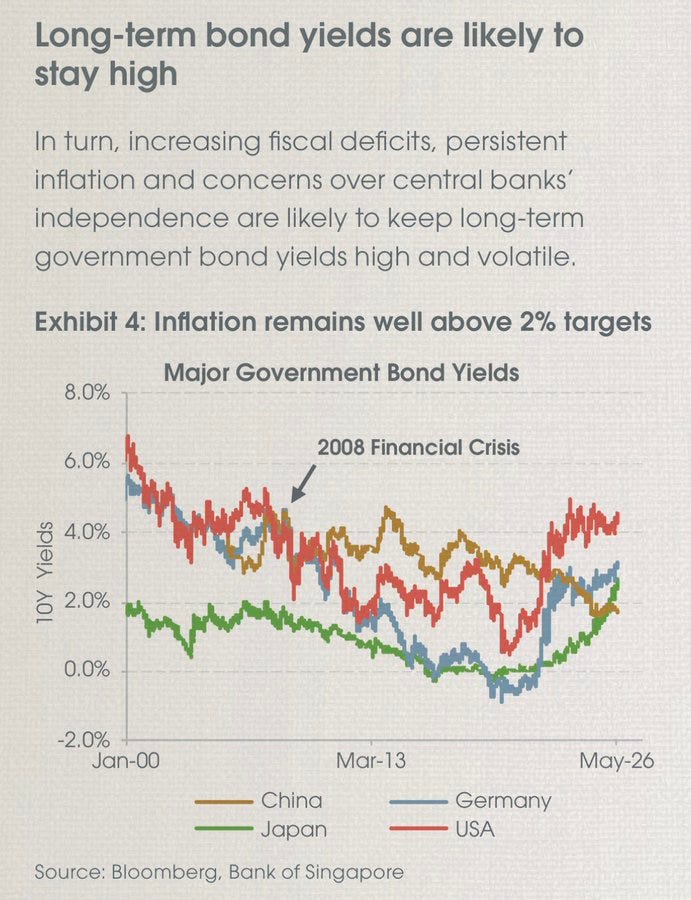
But if the bond market looks at the fiscal situation + inflation + oil + Treasury issuance and is still demanding 5% on the long end, then cutting Fed Funds doesn’t necessarily give Trump the easing cycle he wants.
You could actually get the annoying scenario where the Fed cuts 100bps and the 10Y barely moves because the term premium keeps expanding.
And this is also why the Japan/Yen situation is more important than people think.
Japan is one of the biggest holders of Treasuries. You absolutely do not want a situation where defending the Yen forces Japan to become a seller of USTs at exactly the same time America is issuing enormous amounts of debt.
Bessent seems very aware of this.
The recent US/Japan intervention therefore wasn’t just about saving the Yen IMO. It was partly about protecting the global dollar system.
Basically:
Weak Yen → Japan needs dollars → potential Treasury selling → UST yields higher → US financial conditions tighten → housing/economy gets smoked.
And that’s probably the biggest risk to the bullish thesis IMO.
I agree that other energy resources will eventually replace oil, I’m also bearish oil longer term, but oil isn’t one market.
Transportation, petrochemicals, aviation and industrial demand are different from electricity generation. LNG can destroy gas/coal economics in certain places without necessarily destroying crude demand at the same speed.
And supply matters just as much.
On the topic of private credit, it may have delayed monetary tightening rather than escaped it. The Fed now puts the U.S. private-credit loan market at roughly $1.4T, around one-third of below-investment-grade corporate debt
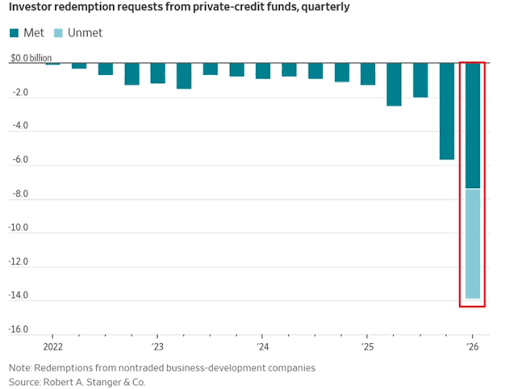
The Fed says semi-liquid private-credit vehicles now hold about $425B of gross assets, and redemption requests accelerated in Q1 2026, with many managers using their roughly 5% redemption caps. At the same time, bank credit commitments to nonbank financial institutions reached $2.6T, with PE/BDCs/private credit the largest exposure category.
A lot of private borrowers are floating-rate and already have relatively weak debt-service capacity. The Fed notes interest coverage on riskier private firms has been deteriorating, while private-credit borrowers were coming in around ~2x coverage at issuance.
So far the system has absorbed that through extensions, restructurings and patient capital rather than immediate liquidation.
Private credit is now ~$1.4T and roughly a third of below-IG corporate debt. Meanwhile banks’ commitments to PE/BDCs/private credit grew ~17% last year.
It’s that higher-for-longer eventually forces lenders to stop extending and start rationing credit.
Then we will see: weak borrower → restructuring/default → private lender takes losses → underwriting tightens → PE refinancing/M&A slows → employment/capex weakens → broader economy rolls over.
We’re already seeing the first cracks where redemption requests at some private-credit vehicles jumped enough that managers started capping withdrawals, and the Fed now explicitly lists private credit among its major near-term financial-stability risks.
The irony is that private credit may have helped prevent a recession earlier by cushioning borrowers from public-market price discovery.
But in doing so, it may also have extended the cycle and created a larger lagged tightening impulse.


