

neobanks are being squeezed from two directions.
from the top, fintechs are pursuing bank charters to capture the economics they used to rent from sponsor banks: deposits, net interest income, payment access, and regulatory legitimacy.
from the bottom, stablecoins and public blockchains are rebuilding parts of the financial stack as open, programmable rails.
the result is compression.
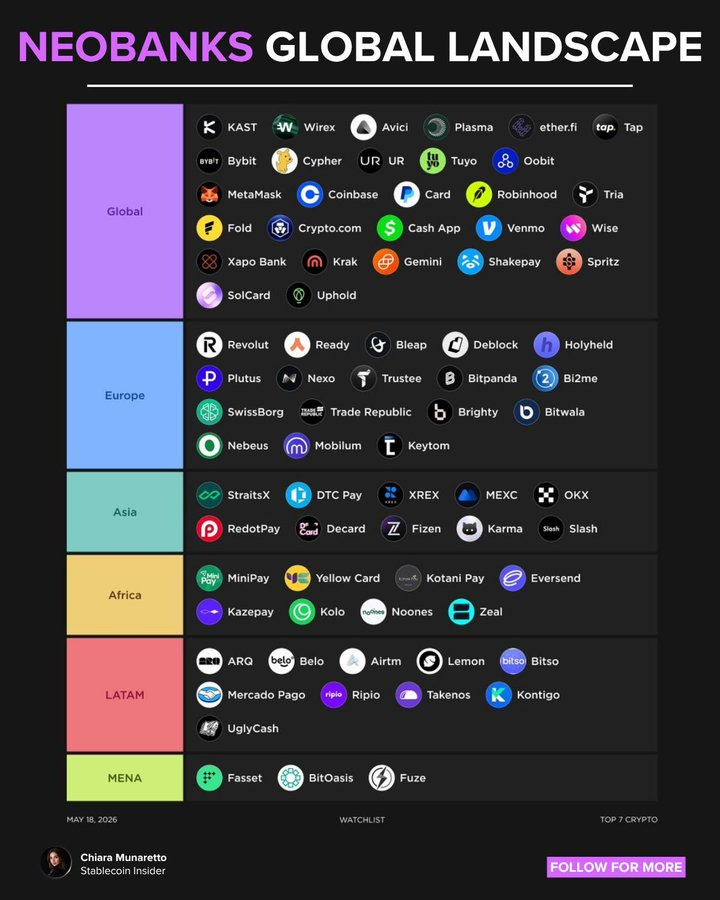
the fat app thesis worked here, with the old neobank model being mostly a distribution layer:
- app + brand + customer relationship
- no balance sheet
- no direct rail access
- no deposit economics
the winning playbook is to own the economics. banking value does not accrue primarily to ux. it accrues to monetizable control points across store > move > grow > borrow money, such as:
- deposits
- credit
- settlement
- compliance
- liquidity
- customer trust
a neobank without these is just a frontend with rented economics.
this is why charters matter. a charter turns a neobank from a customer-acquisition machine into a balance-sheet business.
but charters are only half the story.
stablecoins attack the same stack from below by making settlement global, programmable, and cheaper. they weaken the monopoly of gated rails like ach, swift, and correspondent banking.
so the winning model is hybrid financial infrastructure: a mix of tradfi + crypto.
- regulated balance sheet where trust is required
- blockchain rails where speed and programmability matter
- defi protocols where financial products can be composed
- consumer apps where the relationship is owned
the future neobank is therefore not just a bank app.
most fintechs monetize only one layer. the trillion-dollar neobank captures all four.
this creates clear winners and losers.
winners:
- chartered fintechs
- crypto exchanges with distribution
- wallets that become financial apps
- defi protocols with real integrations
- stablecoin rails embedded into consumer finance
losers:
- middleware-dependent neobanks
- remittance firms relying on fx spreads
- wallets with no monetization
- banks with legacy ux
- defi protocols with no distribution
financial infrastructure is becoming more modular at the backend, but more consolidated at the frontend.
users will not care whether yield comes from a bank deposit, tokenized t-bills,
,
, or a stablecoin vault.
they will care about one thing if the app can be trusted to help them store, move, earn, borrow, and spend money better than their bank.
that is the endgame.
the bank account becomes a wallet.
the wallet becomes a bank.
the winner owns the interface between regulated finance and permissionless rails.
everything else is rented infrastructure.


